
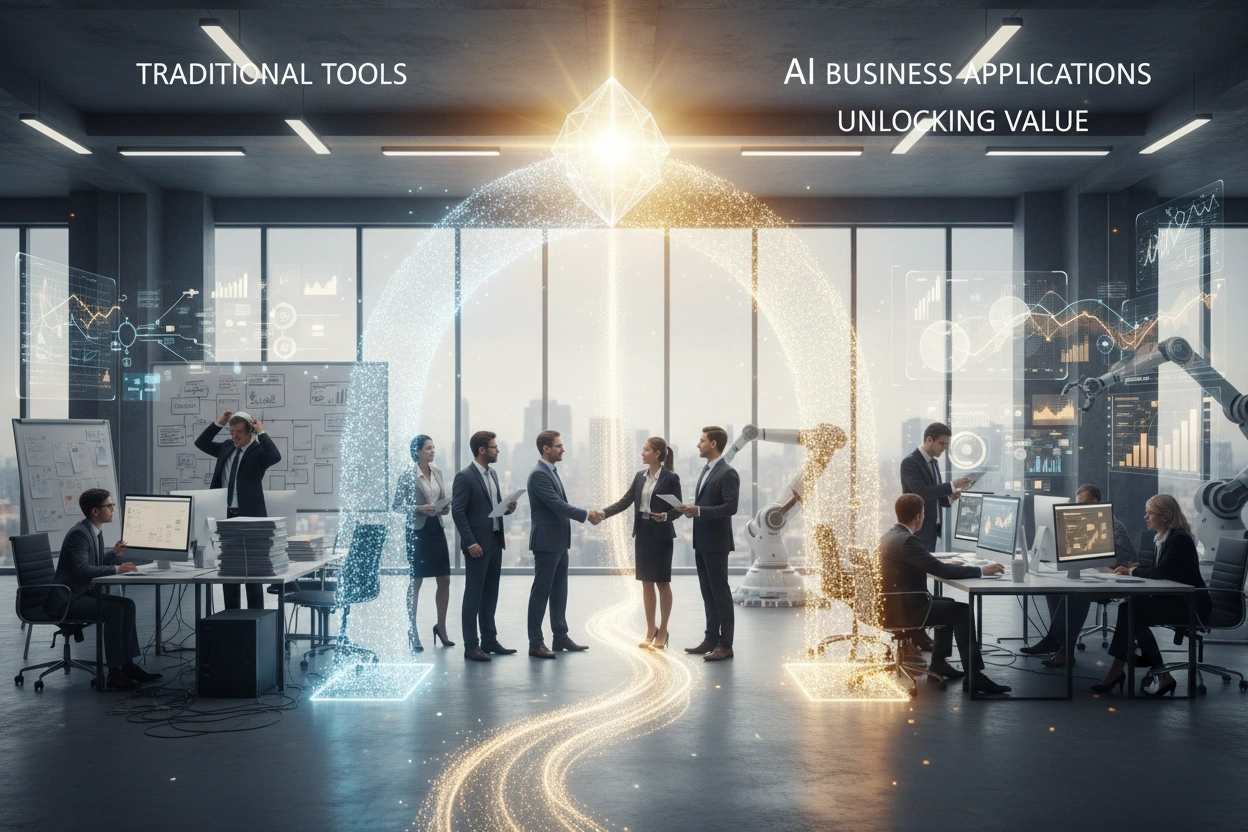
In the rapidly changing business environment of 2026, the integration of technology into everyday operations has become more critical than ever. Organizations are increasingly recognizing the potential of AI business applications to streamline processes, enhance decision-making, and drive growth. Traditional tools, while still relevant, often lack the adaptability and intelligence offered by AI-driven solutions. This article will analyze the differences between AI business applications and traditional tools, explore effective implementation strategies for machine learning in business, and provide actionable insights for small and medium-sized business owners looking to harness these technologies.
The Rise of AI Business Applications

AI business applications are software solutions that utilize artificial intelligence to automate tasks, analyze data, and improve overall efficiency. They are transforming the way businesses operate by providing insights that were previously unattainable through traditional tools. The emergence of these applications is not merely a trend; it's a fundamental shift in how organizations approach problem-solving and decision-making.
Advantages of AI Business Applications
AI business applications offer several advantages over traditional tools, including:
- Enhanced Data Analysis: AI can process vast amounts of data quickly and accurately, uncovering trends and insights that might be missed by human analysts.
- Automation of Routine Tasks: Repetitive tasks can be automated, freeing up employee time for more strategic activities.
- Predictive Capabilities: Machine learning algorithms can forecast future trends based on historical data, allowing businesses to make informed decisions.
These benefits make AI business applications a compelling choice for organizations seeking to stay competitive in an increasingly data-driven marketplace.
Key Differences from Traditional Tools
While traditional tools have served businesses well for decades, they often lack the flexibility and intelligence required to adapt to modern challenges. Key differences include:
- Static vs. Adaptive: Traditional tools are typically static, relying on pre-defined rules and processes. AI applications, however, learn and adapt over time, improving their performance as they gather more data.
- Limited Insights vs. In-Depth Analysis: Traditional tools may provide basic reporting features, while AI business applications offer advanced analytics and visualization capabilities that can reveal hidden patterns.
- Manual Intervention vs. Automation: Many traditional tools require significant manual input and oversight. AI applications can operate autonomously, reducing the need for human intervention in routine tasks.
Understanding these differences is vital for business leaders who want to leverage technology effectively.
AI Implementation Strategies

Implementing AI business applications requires careful planning and execution. Here are some strategies to consider when integrating AI business applications into your business operations.
Assessing Business Needs
Before adopting any AI solution, it is crucial to assess your organization’s specific needs. Consider the following:
- Identify Pain Points: What processes are inefficient? Where does the business struggle with data analysis?
- Set Clear Objectives: Define what you hope to achieve with AI, whether it's improving customer service, increasing sales, or enhancing operational efficiency.
- Evaluate Current Tools: Analyze your existing tools to determine where AI can add the most value.
This assessment will help you select the most appropriate AI business applications for your organization.
Selecting the Right AI Tools
Choosing the right AI tools can significantly impact the success of your implementation. Consider these factors:
- Scalability: Ensure the AI application can grow with your business needs.
- Integration Capabilities: Check if the tool can easily integrate with your existing systems and workflows.
- User-Friendliness: A user-friendly interface will encourage adoption among employees.
Taking the time to select the right tools will pay dividends in the long run.
Training and Change Management
The introduction of AI business applications may require a cultural shift within your organization. Effective change management strategies include:
- Training Programs: Invest in comprehensive training for employees to familiarize them with new tools and processes.
- Open Communication: Maintain transparency about the changes and encourage feedback from employees.
- Support Systems: Establish support channels for employees to address any challenges they may face during the transition.
These strategies will facilitate a smoother integration of AI into your business operations.
Common Misconceptions About AI in Business
Despite the growing popularity of AI business applications, several misconceptions persist. Addressing these misunderstandings is essential for effective implementation.
AI Will Replace Human Workers
One of the most common misconceptions is that AI will entirely replace human workers. In reality, AI is designed to augment human capabilities, not replace them. By automating repetitive tasks, AI frees up employees to focus on more strategic, creative, and interpersonal aspects of their roles. This leads to greater job satisfaction and productivity.
AI is Only for Large Enterprises
Another misconception is that AI business applications are only suitable for large organizations. In truth, AI solutions are increasingly accessible to small and medium-sized businesses. Many providers offer scalable solutions tailored to the needs of smaller enterprises, making it possible for them to leverage AI for improved efficiency and competitiveness.
AI Implementation is Incredibly Complex
While implementing AI does require planning and strategy, it is not as daunting as many believe. With the right tools and a well-defined approach, organizations can successfully integrate AI into their operations without overwhelming complexity.
The Future of AI in Business
Looking ahead, the role of AI business applications will continue to expand. As technology evolves, organizations must remain adaptable and open to innovation. The following trends are likely to shape the future of AI in business:
Increased Personalization
AI's ability to analyze customer data will lead to more personalized experiences. Businesses can tailor their offerings and communications to individual preferences, enhancing customer satisfaction and loyalty.
Enhanced Decision-Making
AI will increasingly assist in decision-making processes by providing data-driven insights. Organizations will be able to make quicker, more informed decisions, improving their responsiveness to market changes.
Greater Collaboration Between Humans and AI
As AI technology continues to mature, the collaboration between humans and AI will become more seamless. Employees will work alongside AI tools, leveraging their strengths to drive innovation and efficiency.
The Value of AI Business Applications
The integration of AI business applications represents a significant opportunity for organizations looking to improve their operations and decision-making. By understanding the advantages, implementation strategies, and common misconceptions, businesses can effectively navigate the shift towards AI-driven solutions.
How GuacRich Can Help
At GuacRich, we understand the importance of leveraging AI business applications to enhance efficiency and decision-making. Our expertise can guide you through the process of selecting and implementing the right AI tools tailored to your specific needs.
By partnering with GuacRich, you can confidently embrace the future of AI in your organization. Visit GuacRich to learn more about how we can support your journey toward improved business performance.
Subscribe to our weekly newsletter
Lorem ipsum dolor sit amet consectetur elementum laoreet vitae suspendisse ullamcorper ut integer lectus lacus.
