
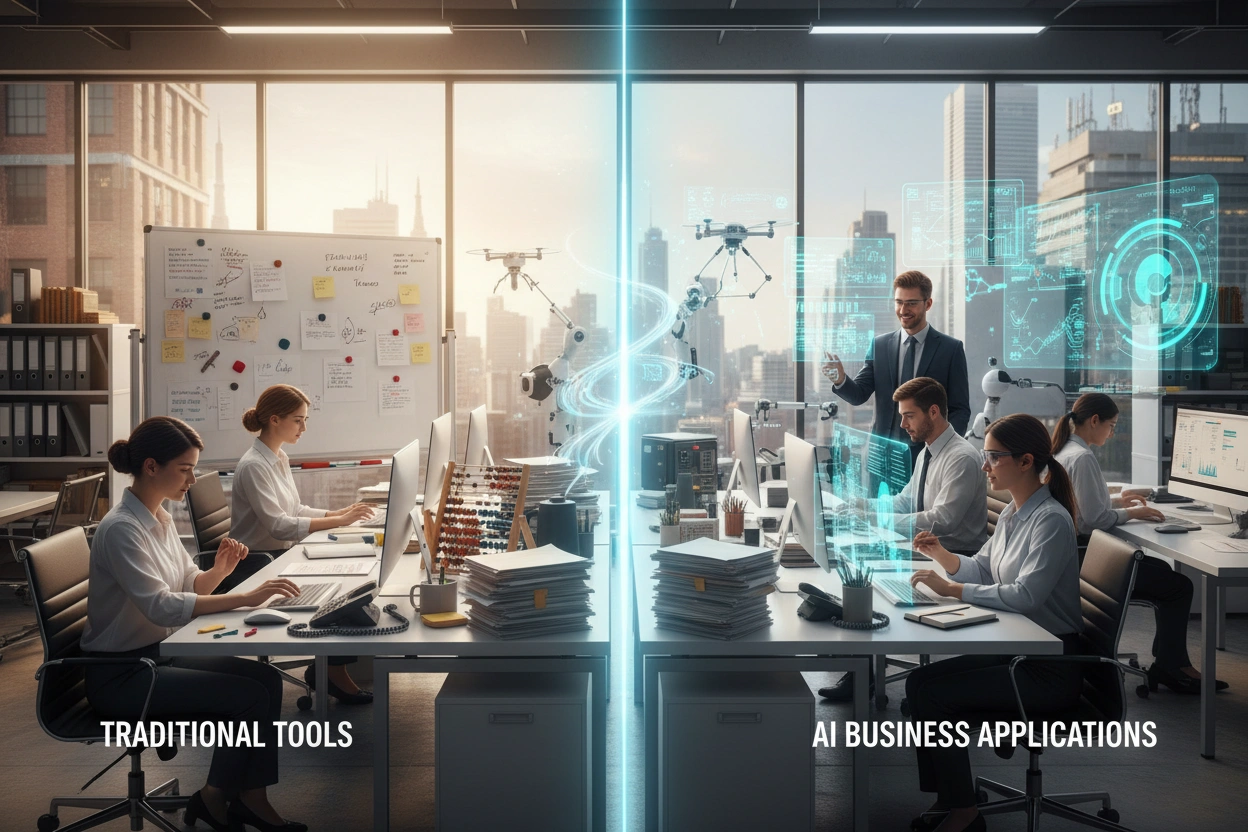
In the dynamic landscape of business operations, the choice between AI business applications and traditional tools has sparked significant interest among decision-makers. As organizations strive to enhance efficiency, optimize resource allocation, and improve customer experiences, the debate centers on which approach yields superior outcomes. AI technologies, particularly machine learning, offer transformative potential, while traditional tools maintain a strong presence due to their established reliability. This article will analyze both approaches, providing insights into AI implementation strategies and how they can drive better results.
Understanding AI Business Applications

AI business applications leverage advanced algorithms and machine learning to automate processes, analyze data, and generate insights that inform decision-making. These applications can range from customer relationship management (CRM) systems that use predictive analytics to enhance sales strategies to supply chain management systems that optimize inventory levels based on real-time data.
Benefits of AI Business Applications
The benefits of incorporating AI into business processes are substantial:
- Enhanced Efficiency: AI applications automate routine tasks, freeing up employees to focus on strategic initiatives. For example, chatbots can handle customer inquiries, allowing human representatives to tackle more complex issues.
- Data-Driven Insights: Machine learning in business enables organizations to analyze vast datasets quickly, uncovering trends and patterns that would be difficult to identify manually. This can lead to better decision-making and more effective marketing strategies.
- Scalability: AI systems can easily adapt to increased workloads. As a company grows, AI can manage larger datasets without requiring significant changes to infrastructure.
Common Misconceptions about AI
Despite the clear advantages, misconceptions about AI persist:
- AI Replaces Jobs: While automation may displace certain roles, it often creates new opportunities that require different skill sets. Businesses can reskill employees to take on higher-value tasks.
- High Implementation Costs: Many believe that integrating AI is prohibitively expensive. However, various scalable solutions are available that can fit a range of budgets, especially for small and medium-sized businesses.
Traditional Tools: A Reliable Choice

Traditional business tools, such as spreadsheets and manual reporting systems, have been the backbone of many organizations for years. These tools are often viewed as reliable due to their familiarity and simplicity.
Advantages of Traditional Tools
Traditional tools come with their own set of benefits:
- Ease of Use: Many employees are already familiar with tools like Microsoft Excel, which reduces the learning curve associated with new software.
- Cost-Effectiveness: For smaller organizations, the upfront costs associated with AI applications can be daunting. Traditional tools often require less investment and can be sufficient for businesses with limited data needs.
- Control and Customization: Businesses can tailor traditional tools to their specific processes, ensuring that they meet unique operational requirements without the complexities of AI systems.
Limitations of Traditional Tools
However, relying solely on traditional tools may hinder growth and efficiency:
- Manual Data Entry: Traditional systems often require significant manual input, increasing the likelihood of human error and consuming valuable time.
- Limited Data Analysis Capabilities: Traditional tools typically lack the sophisticated analytics capabilities of AI applications, making it challenging to derive actionable insights from large datasets.
AI Implementation Strategies

To successfully integrate AI business applications, organizations need to adopt effective implementation strategies that align with their goals and operational realities.
Step-by-Step AI Implementation Process
- Define Objectives: Clearly articulate what you aim to achieve with AI. This could range from automating customer service processes to improving supply chain efficiency.
- Conduct a Needs Assessment: Evaluate existing processes and identify areas where AI can add the most value. This analysis should include current pain points and inefficiencies.
- Select the Right Tools: Research and choose AI applications that align with your objectives. Consider factors such as scalability, ease of integration, and support.
- Pilot Program: Start with a small-scale pilot to test the AI application in real-world scenarios. This allows for adjustments before a full-scale rollout.
- Train Employees: Invest in training your team on how to use the new tools effectively. Ensuring that employees are comfortable with AI applications is essential for success.
- Monitor and Iterate: Continuously evaluate the performance of the AI applications against your objectives. Be prepared to make adjustments based on feedback and changing business needs.
Common Mistakes to Avoid
When implementing AI, organizations should be mindful of several pitfalls:
- Neglecting Data Quality: AI systems rely heavily on data. Poor-quality data can lead to inaccurate results, undermining the effectiveness of the application.
- Ignoring Change Management: Failing to prepare employees for changes in processes can lead to resistance and underutilization of AI tools.
- Setting Unrealistic Expectations: Organizations should have realistic expectations regarding the outcomes of AI implementations. Understanding that AI is a tool, not a magic solution, is key to achieving success.
The Impact of Machine Learning in Business
Machine learning, a subset of AI, plays a pivotal role in enhancing business applications. It involves training algorithms to learn from data and improve over time without human intervention.
Key Applications of Machine Learning
- Predictive Analytics: Businesses can use machine learning to forecast trends, customer behavior, and sales performance. This enables proactive decision-making and resource allocation.
- Personalization: Machine learning algorithms can analyze customer preferences and behaviors, allowing businesses to tailor their offerings and marketing strategies for individual users.
- Fraud Detection: Financial institutions leverage machine learning to identify unusual patterns that may indicate fraudulent activity, enhancing security and reducing losses.
Challenges of Machine Learning Integration
Integrating machine learning into existing business processes can present challenges:
- Complexity of Implementation: Machine learning systems require substantial expertise and resources to set up and maintain. Organizations must be prepared to invest in the necessary infrastructure and talent.
- Data Privacy Concerns: As machine learning relies on large datasets, businesses must navigate data privacy regulations and ensure compliance to avoid legal issues.
Evaluating the Results: AI vs. Traditional Tools
When comparing AI business applications to traditional tools, organizations should focus on the metrics that matter most to their operations.
Key Performance Indicators (KPIs) to Measure
- Operational Efficiency: Assess the time saved through automation and streamlined processes.
- Customer Satisfaction: Analyze customer feedback and engagement metrics to determine the impact on user experience.
- Return on Investment (ROI): Calculate the financial benefits derived from AI applications versus the costs of implementation and maintenance.
Real-World Examples
- Retail Sector: Many retailers have adopted AI-driven inventory management systems that analyze sales trends and optimize stock levels. This results in reduced carrying costs and improved sales forecasting.
- Healthcare Industry: AI applications in healthcare have enabled predictive analytics for patient outcomes, leading to better treatment plans and resource allocation.
The Future of AI Business Applications
Looking ahead, the landscape of AI business applications is poised for further growth and innovation. As technology advances, we can expect:
- Increased Accessibility: More businesses will have access to AI tools that were previously only available to larger enterprises, thanks to advancements in cloud computing and user-friendly interfaces.
- Integration with IoT: The convergence of AI and the Internet of Things (IoT) will enable smarter data collection and analysis, enhancing decision-making across various sectors.
- Ethical AI: As businesses increasingly rely on AI, ethical considerations regarding data usage and algorithmic bias will become paramount, necessitating clear policies and practices.
The Intersection of AI Applications and Business Efficiency
The choice between AI business applications and traditional tools hinges on an organization's unique needs, goals, and capacity for change. While traditional tools offer familiarity and simplicity, AI applications provide the potential for enhanced efficiency, data-driven insights, and scalability. Understanding the implementation strategies and recognizing the limitations and advantages of each approach will empower organizations to make informed decisions that drive results.
For growth-minded SMB owners looking to leverage AI for improved efficiency and decision-making, GuacRich offers tailored solutions designed to simplify the integration of AI into your operations. With our expert guidance, you can navigate the complexities of AI applications and harness their power to elevate your business.
To learn more about how GuacRich can assist you in optimizing your business processes with AI, visit GuacRich.
Subscribe to our weekly newsletter
Lorem ipsum dolor sit amet consectetur elementum laoreet vitae suspendisse ullamcorper ut integer lectus lacus.
